ESP32 vs ESP8266
Introduction
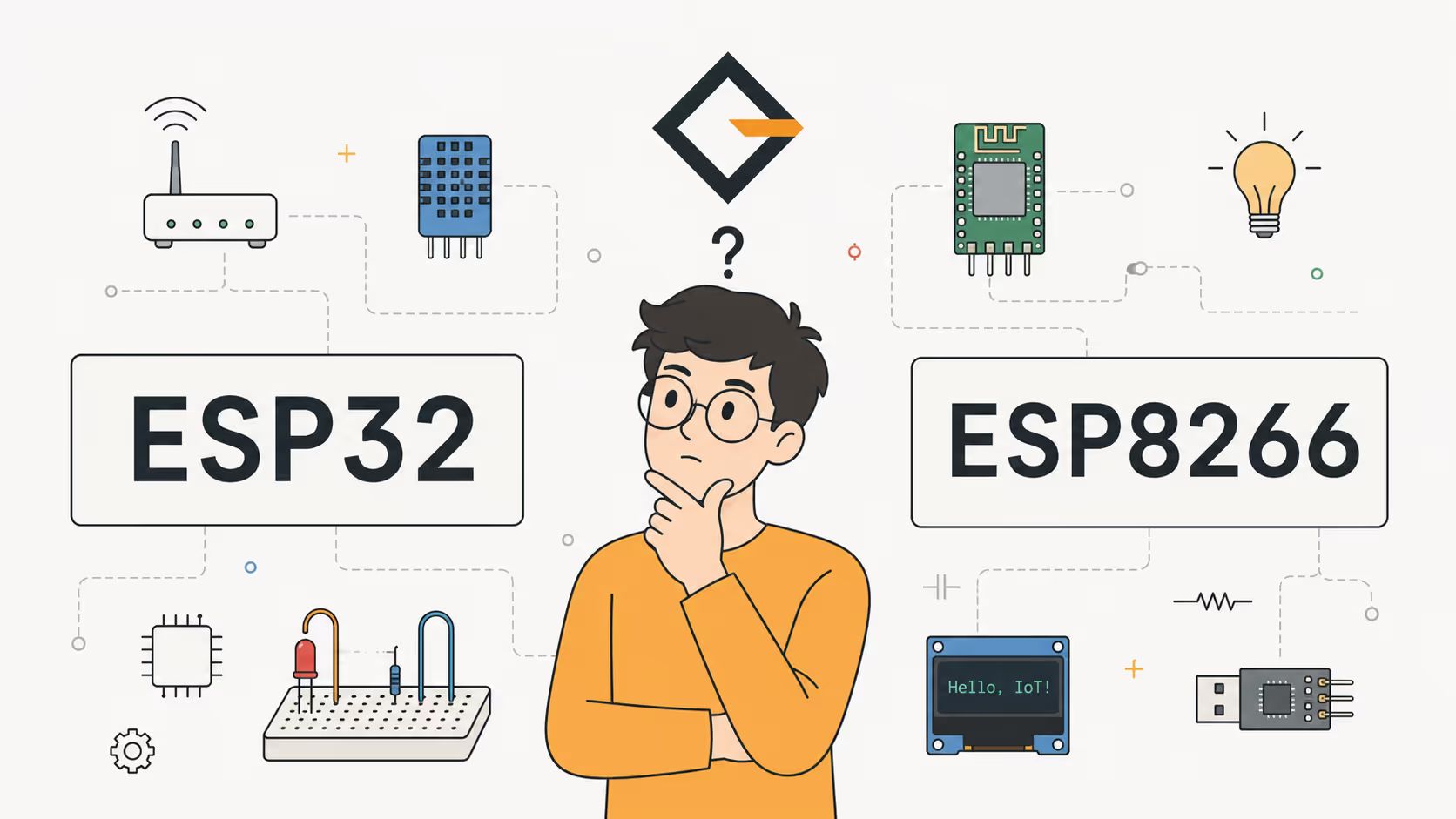
ESP32 and ESP8266 are often mentioned together because both belong to the same broad family of affordable WiFi-friendly microcontrollers from Espressif. They helped make connected DIY hardware dramatically more accessible, and both still show up in real projects.
The confusion starts when someone has to pick one. At a glance, they can seem interchangeable: both are small, inexpensive, programmable over USB on common dev boards, and widely supported by tools like Arduino and PlatformIO.
In practice, they are not the same class of choice anymore.
TL;DR: If you are starting a new project and you want the safer long-term pick, choose the ESP32. The ESP8266 still has a place in smaller WiFi-only builds, but the ESP32 is usually more flexible, more capable, and easier to grow with.
- ESP8266 is simpler and narrower, but still useful for lightweight WiFi tasks
- ESP32 adds more performance, more hardware flexibility, and Bluetooth
- For most new connected gadgets, ESP32 is the better default choice
- ESP8266 still makes sense when you want the smallest possible scope or are maintaining older designs
What the ESP8266 and ESP32 Have in Common
Both platforms became popular for the same core reason: they made WiFi much easier to use in hobby and small-product hardware.
Before boards like these became common, connected projects often required more expensive hardware or awkward add-on modules. The ESP8266 helped break that barrier. The ESP32 pushed the idea further by making the overall platform broader and more capable.
That shared origin matters because the choice is not usually between "good" and "bad." It is between an older, lighter platform and a newer, more complete one.
| Shared trait | Why it matters |
|---|---|
| Low cost | Both platforms are affordable enough for hobby projects and practical prototypes |
| WiFi support | Both are designed for network-aware devices rather than isolated microcontroller tasks |
| Strong ecosystem | Arduino, PlatformIO, tutorials, and community examples make both easy to approach |
| Small form factors | Both are available on compact boards that work well for embedded gadgets |
Why the ESP8266 Mattered So Much
The ESP8266 deserves credit because it changed expectations. It proved that connected microcontroller projects did not need to feel expensive or inaccessible.
For many makers, it was the board that made things like WiFi dashboards, smart switches, simple sensor nodes, and lightweight web-controlled devices feel realistic for the first time.
That historical role matters when comparing it with the ESP32. The ESP32 did not appear out of nowhere. It built on the momentum the ESP8266 created and expanded what people could reasonably expect from a low-cost connected platform.
Where the ESP32 Pulls Ahead
If you read a broader explanation like What is the ESP32?, the pattern becomes clear quickly: the ESP32 is not just a WiFi board. It is a more complete foundation for connected devices.
The biggest practical advantage is not one single spec. It is the amount of headroom you get. More performance, broader peripheral support, and built-in Bluetooth make the ESP32 easier to use for projects that evolve beyond their first prototype.
In real projects, that often means fewer compromises later. A device that starts as a simple WiFi gadget may later need a better display flow, more inputs, a cleaner onboarding path, or a local Bluetooth interaction. The ESP32 leaves more room for that kind of growth.
- 1ESP32 usually gives you more processing and feature headroom.
- 2ESP32 includes Bluetooth in addition to WiFi, which expands possible device workflows.
- 3ESP32 is generally a stronger fit for richer UIs, more peripherals, and more ambitious connected products.
Core Practical Differences
From a project perspective, the difference is less about benchmark numbers and more about design freedom.
The ESP8266 is good when the job is narrow and stable. Read a sensor, host a small interface, trigger a network action, or publish a simple status update. If the device's role is clear and minimal, it can still do that well.
The ESP32 is better when the project may become more interactive, more physical, or more product-like. That includes displays, multiple inputs, more complex state, more communication paths, and devices that need room to mature.
| Topic | ESP8266 | ESP32 |
|---|---|---|
| General direction | Smaller WiFi-first projects | Broader connected device projects |
| Wireless features | WiFi | WiFi and Bluetooth |
| Project headroom | Lower | Higher |
| Best fit | Tight, focused builds | Devices that may grow in capability over time |
Which One Is Better for Beginners?
This depends on what "beginner" actually means.
If a beginner wants the simplest possible path to a tiny WiFi experiment, the ESP8266 can still work. It is small, cheap, and supported by many examples. For someone reviving an older tutorial or building a very narrow device, it is still usable.
But most beginners today do not just want to blink an LED over WiFi. They want to build a useful connected object. That usually means displays, sensors, buttons, configuration flows, or some kind of flexible interaction.
That is where the ESP32 is the better beginner board. It lets a newcomer build the kind of project they actually have in mind without running into the ESP8266's limits too early.
When the ESP8266 Still Makes Sense
The ESP8266 is not obsolete just because the ESP32 exists. It still makes sense in a few situations.
- You are maintaining an existing project that already uses ESP8266 hardware
- The build is intentionally minimal and only needs straightforward WiFi behavior
- You want the simplest possible hardware scope for a very small device
- You are following a mature codebase or tutorial that already targets ESP8266 clearly
In those cases, switching just for the sake of switching is not always useful. Good engineering is not about picking the newest part every time. It is about choosing the part that fits the real problem.
When the ESP32 Is the Clearer Choice
For most new OpenGizmo-style projects, the ESP32 is the clearer choice.
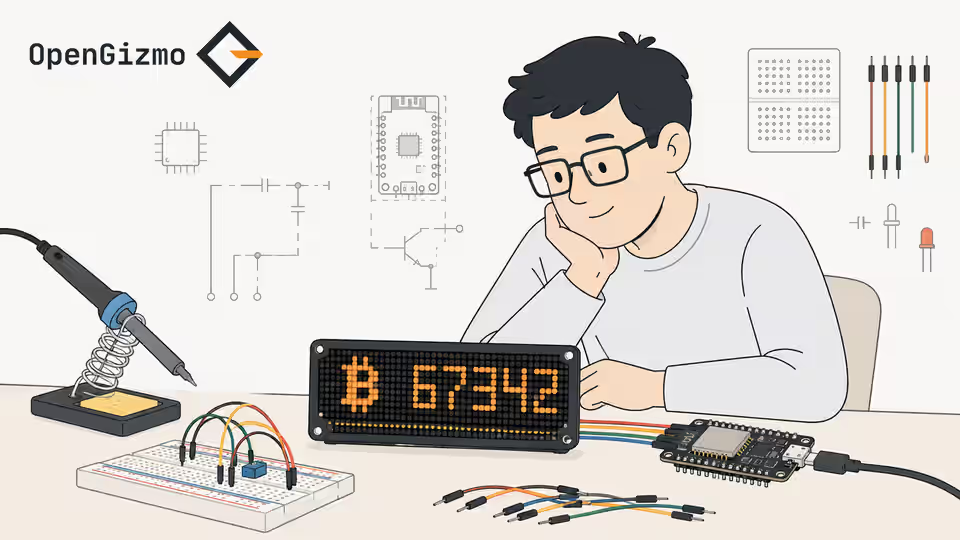
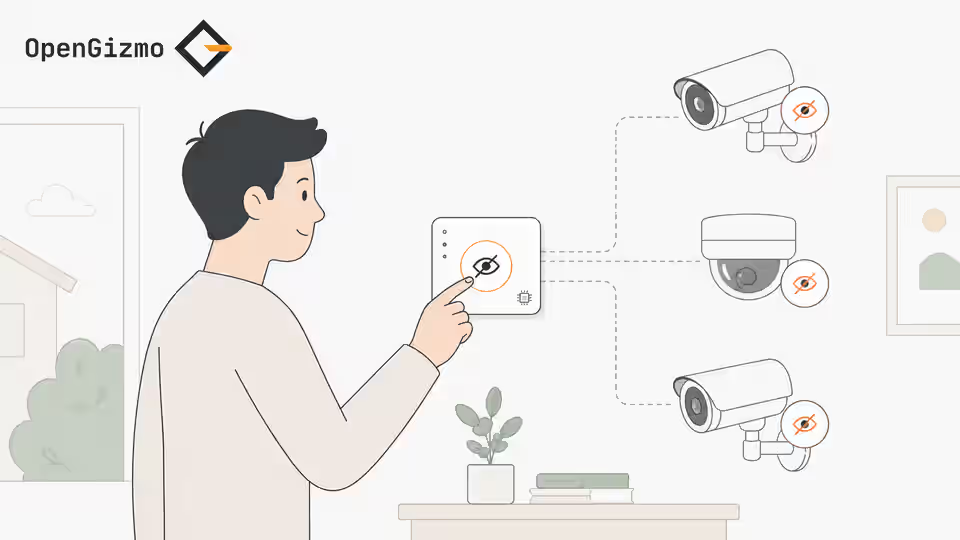
If you are building something like a status display, a connected utility, a setup flow, or a dedicated physical tool, the ESP32 simply gives you more room to build the device well. That is one reason projects like Gizmo Ticker and Gizmo Reolink Switch fit the ESP32 direction much more naturally.
It also reduces redesign risk. Choosing a board with more flexibility early can save time later when the project becomes more polished than the first prototype suggested.
Performance Is Not the Whole Story
A lot of comparison posts reduce this decision to raw capability. That misses the practical point.
In embedded projects, the better chip is not just the one with the better spec sheet. It is the one that supports the user experience you are trying to create without forcing awkward compromises around inputs, connectivity, or future changes.
That framing is why the ESP32 wins more often. It is not only stronger on paper. It is easier to turn into a more complete product.
Ecosystem and Tooling
Both chips benefit from a large ecosystem, but the center of gravity for newer connected maker projects has shifted toward the ESP32.
That means more recent libraries, more contemporary examples, and more project ideas that assume the richer capabilities of the newer platform. If you are learning from scratch today, that matters. You will usually find more forward-looking material built around ESP32 than around ESP8266.
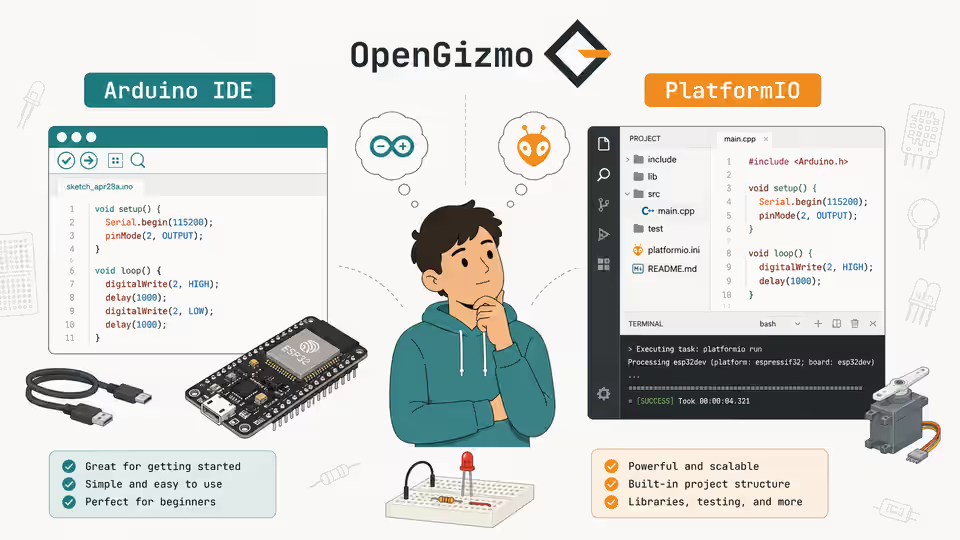
That said, both still work with common workflows, and neither forces you into a niche toolchain. If you already understand Arduino or PlatformIO, the jump between them is conceptually small.
How to Decide Quickly
If you do not want to overthink the decision, use this rule:
- 1Choose ESP32 for new projects unless you have a clear reason not to.
- 2Choose ESP8266 when the build is intentionally minimal or tied to existing hardware and firmware.
- 3If Bluetooth, future expansion, or richer device interaction might matter, choose ESP32 immediately.
That rule is not perfect, but it is practical. Most people benefit more from starting with enough headroom than from optimizing too early for a smaller board.
Final Thoughts
ESP8266 was one of the most important chips in the rise of accessible connected hardware, and it still deserves respect for that.
But for most new projects, ESP32 is the stronger recommendation. It gives you more flexibility, more room to improve the device, and a better match for the kind of connected gadgets people usually want to build now.
If your goal is to make a small but real product instead of a one-off demo, ESP32 is usually the better long-term choice.
Frequently asked questions
Find quick answers to the most common questions about this topic.
The main difference is that the ESP32 is newer and more capable, with more performance, more GPIO flexibility, and built-in Bluetooth alongside WiFi, while the ESP8266 is simpler and more limited.
In most new projects, yes. The ESP32 is usually the better choice because it gives you more headroom and fewer limitations without giving up the low-cost appeal of the platform family.
Yes, the ESP8266 still makes sense for very small WiFi-focused builds where cost, simplicity, or existing code matters more than extra features.
Most beginners should start with the ESP32 because it is more flexible and better aligned with the kind of connected projects people usually want to build today.
Yes. Both platforms are widely used with Arduino and PlatformIO, although the ESP32 ecosystem is broader for newer connected hardware projects.

Author