Arduino IDE vs PlatformIO for ESP32
Introduction
If you are starting with ESP32 development, one of the first decisions you will face is whether to use Arduino IDE or PlatformIO.
Both can compile and upload firmware. Both have enough examples online to get you moving. Both are common in the ESP32 world. But they do not offer the same development experience.
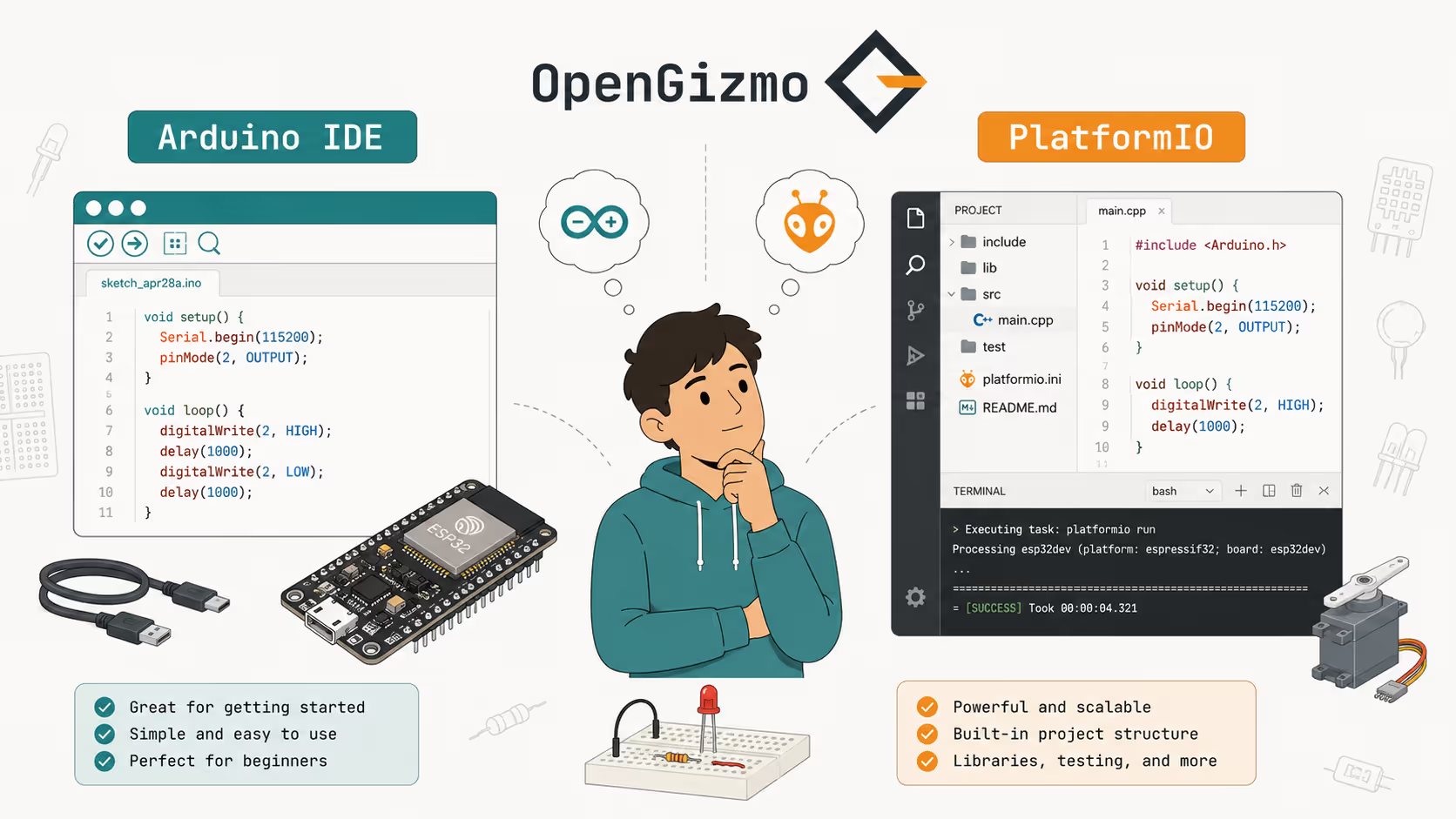
Arduino IDE is simple and approachable. PlatformIO is more structured, more scalable, and better aligned with how real hardware projects usually grow.
TL;DR: Arduino IDE is still a valid beginner option, but PlatformIO is usually the better choice for ESP32 because it gives you cleaner project organization, better dependency handling, and a more modern workflow.
- Arduino IDE is easier to understand on day one
- PlatformIO is cleaner once a project has multiple files, dependencies, or environments
- PlatformIO feels more like a real development setup
- Arduino IDE is still fine for learning and very small projects
What Both Tools Can Do
The two tools are not opposites. They overlap in a lot of important ways.
Both let you write firmware, compile it, upload it to an ESP32 board, and monitor serial output. Both can use the Arduino framework. Both are supported by a large community. If your only goal is to get a board blinking or print a few lines to serial, either one can get the job done.
| Capability | Arduino IDE | PlatformIO |
|---|---|---|
| Compile and upload firmware | Yes | Yes |
| Use Arduino-style code | Yes | Yes |
| Serial monitor | Yes | Yes |
| Library ecosystem support | Yes | Yes |
| Project organization | Basic | Much stronger |
The real difference is not whether they can flash an ESP32. It is how they feel once the project becomes more than a single sketch.
Why Arduino IDE Is Still Valid
Arduino IDE is popular for a reason. It is straightforward, familiar, and low-friction.
For a beginner, that matters. You can install it, add ESP32 board support, paste in an example, and get a result quickly. There is very little ceremony, which makes it good for early learning and quick experiments.
It is also a fine choice if you only need one small sketch, one board, and a minimal workflow. If the project is tiny and you do not care about structure yet, Arduino IDE can be enough.
- 1It has a gentle learning curve.
- 2It is easy to find tutorials that use it.
- 3It is fine for quick proof-of-concept work.
The problem is that the simplicity eventually becomes a limitation. As soon as a project grows, the lack of structure starts costing time.
Why PlatformIO Is the Better Modern Choice
PlatformIO is usually the better choice for ESP32 because it matches how real projects evolve.
It gives you a proper project structure, separates configuration from code, handles libraries more cleanly, and makes it easier to switch between boards or environments. That matters a lot when you are not just blinking a LED, but building something that needs to last.
PlatformIO also feels more predictable. Instead of relying on an IDE that hides a lot of the workflow, you get a clear build configuration and a project layout that scales naturally.
- Cleaner folder and file structure
- Better dependency management
- Easier support for multiple build environments
- More comfortable for version control and collaboration
- Better fit for larger ESP32 applications
That is why many developers start with Arduino concepts but move to PlatformIO once they want to build more serious hardware.
The Biggest Practical Differences
The difference between the two tools becomes obvious when the project stops being tiny.
A single sketch can live happily in Arduino IDE. But a project with separate modules, shared helpers, configuration files, custom build flags, and multiple boards becomes much easier to manage in PlatformIO.
| Topic | Arduino IDE | PlatformIO |
|---|---|---|
| Project structure | Mostly sketch-first | Folder-based and modular |
| Library management | Basic and manual in some cases | More explicit and repeatable |
| Multiple environments | Awkward | Built in and practical |
| Scaling to bigger firmware | Possible, but clumsy | Much more natural |
If you are building a simple toy, Arduino IDE is fine. If you are building a product, a reusable project, or something you may maintain for a long time, PlatformIO is the stronger foundation.
A Good Way to Think About It
The best way to compare Arduino IDE and PlatformIO is not "beginner versus advanced".
It is more accurate to say that Arduino IDE is the fastest way to get started, while PlatformIO is the better place to stay once the project becomes real.
That distinction matters. Beginners often assume they need the "advanced" option immediately, but the right tool depends on the stage of the project. If you are learning the basics, Arduino IDE can reduce friction. If you are making something intended to grow, PlatformIO pays off quickly.
What This Means for ESP32 Projects
ESP32 projects tend to become more ambitious than people expect.
You may start with one sensor or one display, then later add WiFi setup, buttons, local configuration, browser-based flashing, or extra device behavior. That growth is exactly why PlatformIO is such a good fit for ESP32 work.
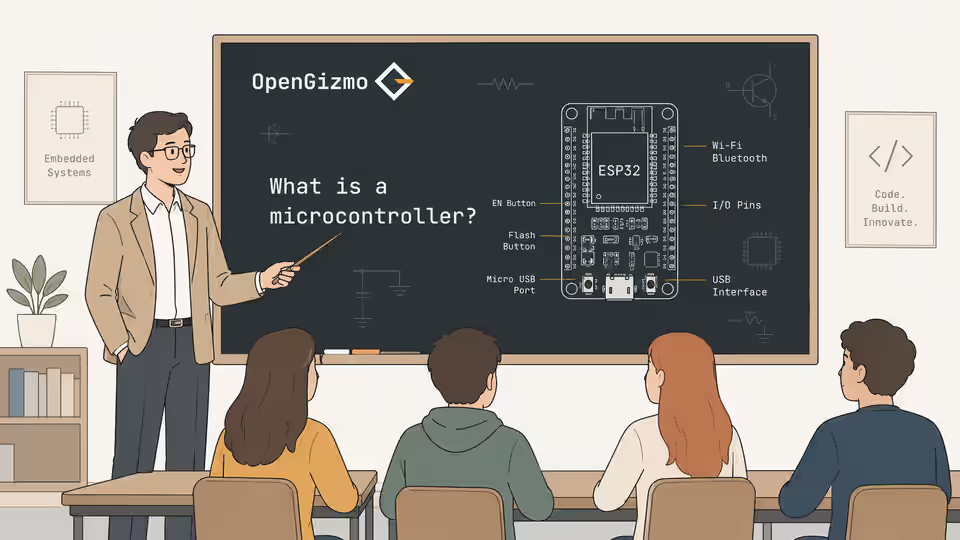
For example, projects like What is the ESP32? and ESP32 vs ESP8266 show how quickly a "simple board" conversation turns into a real device discussion. The same applies to development tools: once the project becomes more than a demo, the workflow matters.
PlatformIO also fits better with projects like Gizmo Ticker and Gizmo Reolink Switch, where the firmware is part of a broader project structure rather than a single throwaway sketch.
When Arduino IDE Makes More Sense
Arduino IDE still makes sense in a few situations.
- You are a beginner and want the simplest possible first step
- You are following a tutorial that is clearly written for Arduino IDE
- You only need a very small sketch and do not care about long-term structure
- You want to validate an idea before investing in a more organized workflow
That is the right way to think about it. Arduino IDE is a good entry point, not the best long-term home for most ESP32 projects.
When PlatformIO Is the Right Default
PlatformIO should be the default choice when you expect the project to matter beyond the first afternoon.
If you care about maintainability, repeatable builds, multiple environments, cleaner dependencies, or collaboration, PlatformIO is the better and more modern option. It is also a better fit for open-source hardware work, where other people may need to understand, build, or extend the project later.
That is the kind of workflow that matches OpenGizmo better too. These are not one-line experiments. They are small but real projects.
Final Thoughts
Arduino IDE is still valid, especially for beginners. It lowers the barrier and helps you get moving quickly.
But if you are serious about building ESP32 projects that will grow, PlatformIO is the better choice. It is more modern, more organized, and more aligned with how practical firmware projects actually get developed.
If you want the shortest path to your first successful upload, Arduino IDE is fine. If you want a workflow you will not outgrow too quickly, PlatformIO is the stronger default.
Frequently asked questions
Find quick answers to the most common questions about this topic.
Yes, for most new ESP32 projects PlatformIO is the better choice because it handles project structure, dependencies, environments, and repeatable builds more cleanly than Arduino IDE.
Yes. Arduino IDE is still a perfectly valid way to learn the basics, flash a first board, and get a simple project working quickly.
People prefer PlatformIO because it feels closer to a real development workflow, with better organization, easier dependency management, and support for larger projects.
Absolutely. Many people begin with Arduino IDE, learn the basics, and switch to PlatformIO when the project grows or they want a cleaner workflow.
No. PlatformIO can still use Arduino framework support under the hood, so you keep access to the broad Arduino ecosystem while gaining a stronger project structure.

Author